
Bukhara is one of the most fascinating historic cities in Uzbekistan. Once an important center of Silk Road trade, Islamic scholarship, and craftsmanship, the city is known for its ancient minarets, magnificent madrasahs, traditional trading domes, and atmospheric old town.
Unlike cities where historic attractions are spread across several neighborhoods, many of Bukhara's most famous landmarks are concentrated in and around its historic center. This makes it an excellent destination for travelers who enjoy exploring on foot, discovering traditional architecture, and experiencing local culture at a relaxed pace.
Whether you are visiting for one day or planning a longer journey through Uzbekistan, this Bukhara travel guide covers the best attractions, suggested itineraries, local food, accommodation, transport, and practical tips to help you plan your trip.
1. Why Visit Bukhara?
Bukhara has a history spanning more than two millennia and was an important center of commerce and learning along historic trade routes. Its architectural heritage reflects centuries of cultural exchange and religious scholarship.
Today, visitors come to explore its preserved historic center, admire its distinctive monuments, browse handicraft shops, and enjoy traditional Uzbek cuisine.
Here are some of the best reasons to visit Bukhara:
Discover the famous Poi Kalyan Complex and its historic minaret.
Explore the Ark of Bukhara, a monumental fortress associated with the city's rulers.
Walk through traditional trading domes that once served merchants.
Relax around the historic Lyabi-Hauz Ensemble.
Visit mosques, madrasahs, and historic courtyards.
Shop for textiles, ceramics, embroidery, and local handicrafts.
Taste Uzbek dishes and regional specialties.
Experience a historic city where many major attractions can be reached on foot.
Bukhara is particularly rewarding for travelers who want to experience the atmosphere of a historic Silk Road city rather than simply visit a collection of individual monuments.
2. Best Time to Visit Bukhara
Spring and autumn are generally the most comfortable seasons for exploring Bukhara, especially if you plan to spend several hours outdoors.
Spring: March to May
Spring is an excellent time to visit. Temperatures gradually rise, and walking through the old town is often pleasant.
March can still be cool, while April and May are often suitable for sightseeing. Bring a light jacket for cooler mornings and evenings.
Summer: June to August
Bukhara can become extremely hot during summer. Because many attractions involve walking through open squares and streets, the heat can make sightseeing tiring.
If you visit in summer, start early, carry water, wear a hat, and take breaks indoors during the hottest part of the day.
Autumn: September to November
Autumn is another popular season for visiting Bukhara. September and October often provide comfortable conditions for exploring the city's historic architecture and markets.
Temperatures become cooler toward November, so pack layers.
Winter: December to February
Winter is usually quieter than the main spring and autumn travel seasons. Cold weather, wind, and occasional rain are possible.
If you enjoy traveling when visitor numbers may be lower, winter can be an option, provided you prepare for the weather and check attraction opening arrangements.
Travel tip: Seasonal conditions vary. Check the forecast before departure and organize outdoor sightseeing around the expected temperature.
3. Best Places to Visit in Bukhara
Bukhara has numerous historical attractions, and you can explore many of its most famous landmarks within one or two days.
Poi Kalyan Complex
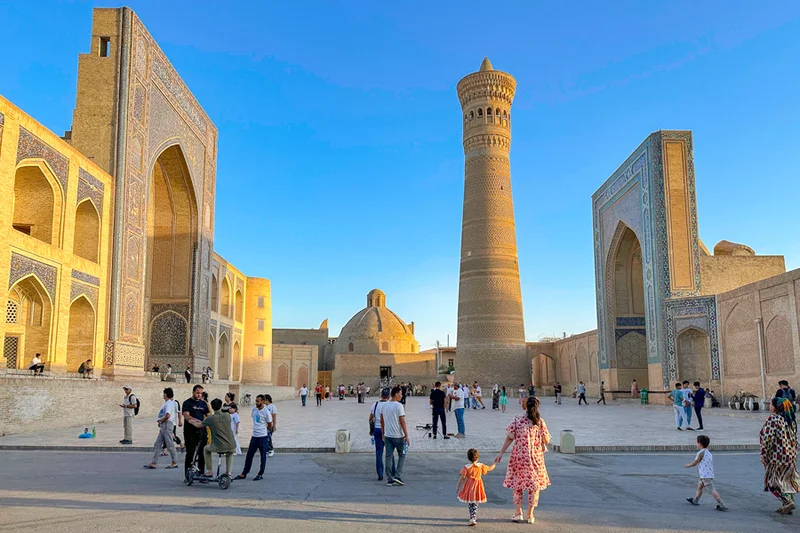
The Poi Kalyan Complex is one of Bukhara's defining landmarks. The ensemble includes the Kalyan Minaret, Kalyan Mosque, and Mir-i-Arab Madrasah.
The Kalyan Minaret rises above the historic center and has long served as one of the city's most recognizable architectural features. The surrounding buildings demonstrate the craftsmanship and religious architecture for which Bukhara is famous.
Allow time to appreciate the complex from different viewpoints and explore the surrounding streets.
Check access rules before entering individual buildings, as some areas may have restrictions or separate admission arrangements.
Ark of Bukhara
The Ark of Bukhara is a historic fortress that served as a residence and administrative center for the city's rulers.
Its imposing walls and internal structures offer insight into Bukhara's political history. Visitors can explore accessible areas and learn about the people and institutions associated with the fortress.
The Ark is a useful stop for understanding Bukhara beyond its religious architecture.
Bolo Hauz Mosque
Located near the Ark, Bolo Hauz Mosque is known for its elegant wooden columns and decorated ceiling.
Its distinctive appearance makes it an interesting destination for architecture enthusiasts and photographers. Because it is near other historic attractions, it can easily be included in a walking route.
Remember that it is a religious site, so dress respectfully and follow any local guidance.
Lyabi-Hauz Ensemble
Lyabi-Hauz is a historic public area centered around a pool and surrounded by architectural monuments, restaurants, and pedestrian spaces.
It is a pleasant place to pause between sightseeing stops, enjoy tea, or have a meal.
The surrounding streets also offer opportunities to explore local shops and admire traditional buildings.
Nadir Divan-Begi Madrasah
Nadir Divan-Begi Madrasah forms part of the Lyabi-Hauz area. Its decorated entrance and historic architecture make it a notable stop for visitors exploring central Bukhara.
The surrounding square may host cultural activities or performances at certain times, but availability varies. Check locally if you are interested in attending an event.
Chor Minor
Chor Minor is a distinctive historic structure known for its four small towers. Its unusual design makes it stand out from Bukhara's larger architectural ensembles.
It is worth visiting if you want to see another side of the city's historic architecture and explore streets beyond the busiest central area.
Allow extra time for the walk and check access arrangements if you plan to enter any interior spaces.
Traditional Trading Domes
Bukhara's historic trading domes reflect the city's importance as a commercial center along regional trade routes.
Today, these covered marketplaces contain shops selling handicrafts, textiles, embroidery, ceramics, jewelry, and souvenirs.
Browsing the shops is an enjoyable way to discover local craftsmanship. Compare prices and politely ask before photographing shopkeepers or their products.
Magoki Attori Mosque
Magoki Attori Mosque is one of the historic religious sites in Bukhara's old town. Its architectural features reflect the city's long and complex history.
It is a worthwhile addition to a walking tour for visitors interested in religious architecture and the development of the historic center.
Check current access and opening arrangements before your visit.
Samanid Mausoleum
The Samanid Mausoleum is one of Bukhara's most important early Islamic monuments. Its brickwork and geometric patterns demonstrate the sophistication of historical architectural design.
The mausoleum is located away from some of the busiest central sightseeing areas, so allow time to reach it.
It is especially interesting for visitors who want to explore the architectural history of Central Asia beyond the best-known madrasahs and minarets.
Chashma-Ayub Mausoleum
Chashma-Ayub Mausoleum is another historic landmark associated with Bukhara's religious and architectural heritage.
Its distinctive form makes it a useful stop for travelers exploring the city's wider historic area. Consider combining it with the Samanid Mausoleum if your schedule allows.
4. How Many Days Do You Need in Bukhara?
For most travelers, one full day is enough to see several major attractions, while two days allow a more relaxed experience.
If you enjoy photography, architecture, local crafts, or visiting museums, spending two days in Bukhara is worthwhile.
One-day Bukhara itinerary
Morning
Start at the Poi Kalyan Complex.
Explore the traditional trading domes.
Visit Magoki Attori Mosque if open and accessible.
Afternoon
Visit the Ark of Bukhara.
See Bolo Hauz Mosque.
Explore the Lyabi-Hauz Ensemble.
Browse local craft shops.
Evening
Enjoy dinner at a traditional restaurant.
Take a relaxed walk through the old town.
This itinerary is flexible. Adjust the order according to opening hours, weather, walking pace, and the time you arrive.
Two-day Bukhara itinerary
Day 1: Historic center
Poi Kalyan Complex
Traditional trading domes
Magoki Attori Mosque
Lyabi-Hauz Ensemble
Nadir Divan-Begi Madrasah
Day 2: Wider historic area
Ark of Bukhara
Bolo Hauz Mosque
Samanid Mausoleum
Chashma-Ayub Mausoleum
Chor Minor
Additional time for crafts, food, and photography
This plan allows you to explore at a comfortable pace and spend more time at places that interest you.
5. What to Eat in Bukhara
Food is an important part of a visit to Bukhara. Uzbek cuisine features rice dishes, grilled meat, noodles, soups, baked pastries, fresh bread, and tea.
Here are some dishes and food experiences to consider.
Plov
Plov is one of Uzbekistan's best-known dishes. It is typically made with rice, carrots, onions, oil, and meat, although ingredients and cooking methods vary by region.
Try it at a reputable local restaurant to experience a staple of Uzbek cuisine.
Shashlik
Shashlik is grilled meat cooked on skewers and commonly served with onions and other accompaniments.
It is a popular choice for lunch or dinner at Uzbek restaurants.
Samsa
Samsa is a baked pastry commonly filled with meat and onions, though vegetarian varieties may also be available.
It is a convenient snack while exploring the old town.
Lagman
Lagman is a noodle dish served with vegetables and usually meat in a flavorful sauce or broth. Different restaurants prepare their own versions.
Bukhara's regional cuisine
Bukhara has local culinary traditions and regional dishes that you may encounter in restaurants and family-run eateries. Ask your guide or restaurant staff about local specialties available during your visit.
Tea and traditional sweets
Tea is a familiar part of Uzbek hospitality. Enjoy it with dried fruits, nuts, or sweets during a break from sightseeing.
Food tip: If you have allergies or dietary restrictions, explain them clearly when ordering. Vegetarian, vegan, and special-diet options may require advance planning.
6. Where to Stay in Bukhara
Bukhara offers a range of accommodation, from budget guesthouses to boutique hotels in historic buildings and larger modern properties.
For most first-time visitors, staying near the old town is convenient because many major attractions are within walking distance.
Near Lyabi-Hauz
This area is a practical base for travelers who want to explore the historic center, visit restaurants, and walk between major attractions.
It can be especially convenient for a short stay.
Near Poi Kalyan
Staying around the Poi Kalyan area puts you close to one of Bukhara's best-known landmarks and the surrounding historic streets.
It is a good option for visitors who prioritize architecture and sightseeing.
Outside the historic center
Hotels farther from the old town may offer different facilities or price points. However, you may need a taxi to reach the main attractions.
Check the exact location before booking rather than relying only on the property's name or general description.
What to check before booking
Distance to the historic center.
Guest reviews and cancellation conditions.
Breakfast availability.
Heating or air conditioning appropriate for your travel season.
Luggage storage and arrival arrangements.
Whether the property can organize station transfers.
For a one- or two-night visit, accommodation within walking distance of the main attractions can save valuable time.
7. How to Get to Bukhara
Bukhara can be reached by train, plane, or road, depending on your starting point and itinerary.
By train from Samarkand or Tashkent
Train travel is a popular option for visitors exploring multiple cities in Uzbekistan.
Services and journey durations vary by route and departure. Check the official railway timetable for the date of travel, and book early when possible during busy periods.
If you are traveling from Samarkand, a train can be a convenient way to reach Bukhara without arranging a long road transfer.
By plane
Bukhara has an airport with domestic and potentially international connections depending on the current schedule.
Flight routes and frequencies change, so confirm the available services before making your plans.
By private transfer
A private transfer offers flexibility if you prefer hotel-to-hotel transport, are traveling with a group, or want to coordinate stops along the route.
Before booking, confirm the vehicle type, pickup time, total fare, luggage capacity, and whether any stops are included.
8. How to Get Around Bukhara
Bukhara's historic center is particularly convenient for walking. Many major landmarks, shops, and restaurants are located within a relatively compact area.
Walking
Walking is usually the best way to explore the old town. It lets you appreciate the architectural details and discover small shops and streets between the main monuments.
Wear comfortable shoes and take breaks, especially during summer.
Taxi
Taxis can be useful for reaching attractions outside the central walking area, traveling with luggage, or getting to and from the railway station.
Confirm the fare or payment method before beginning your trip if it is not clearly displayed.
Private guide and driver
A local guide can explain the history of the monuments, while a private driver can help you reach sites farther from the old town.
For many travelers, a guided walking tour of the historic center combined with transport for more distant attractions is a practical arrangement.
9. Practical Travel Tips for Bukhara
A few simple preparations can help you enjoy your visit.
Carry appropriate identification. Keep travel documents secure and follow local identification requirements.
Check opening hours and entrance fees. Prices, access rules, and schedules can change. Verify current information before visiting individual monuments.
Dress respectfully. Choose clothing suitable for religious sites and follow any specific instructions displayed at the entrance.
Carry local currency. Some markets and small businesses may not accept cards, so having Uzbekistani soʻm is useful.
Protect yourself from the heat. During summer, bring water, sunscreen, and a hat. Schedule outdoor sightseeing early in the morning or later in the afternoon.
Respect local customs. Ask permission before photographing people, particularly in religious settings or private spaces.
Allow time for walking. Even a compact old town involves steps, uneven surfaces, and time spent standing while exploring monuments.
Plan transport in advance. If you have a train or flight to catch, leave a comfortable buffer between sightseeing and departure.
10. Is Bukhara Safe for Tourists?
Bukhara is an established destination for international tourism, and many travelers explore the historic center independently.
As in any destination, use common-sense precautions. Keep valuables secure in crowded areas, use reputable transport services, and agree on prices before purchasing services where costs are not clearly displayed.
Be mindful of heat during summer and wear suitable shoes on historic streets and around monuments.
If you are traveling outside the city, confirm your route and transport arrangements in advance.
11. Can You Visit Bukhara and Samarkand on the Same Trip?
Absolutely. Samarkand and Bukhara are two of the most rewarding destinations to combine on a trip to Uzbekistan.
Samarkand is famous for monumental architecture, including Registan Square and Shah-i-Zinda. Bukhara is known for its atmospheric old town, trading domes, and historic religious buildings.
A practical itinerary is to spend two days in Samarkand and then continue to Bukhara by train or private transfer.
If you have additional time, consider adding Tashkent or Khiva. Your route will depend on your arrival and departure points and available transport connections.
Read our comparison article, Samarkand vs Bukhara: Which City Should You Visit?, to help decide how to divide your time.
12. Day Trips and Experiences Near Bukhara
If you have extra time, you can explore places beyond the main historic center.
Sitorai Mokhi-Khosa Palace
This palace complex was associated with the last emirs of Bukhara and combines elements of local and other architectural influences.
It provides a different perspective on the city's more recent royal history. Check current opening arrangements and transport options before visiting.
Chor Bakr Memorial Complex
Chor Bakr is a historic religious and memorial complex outside the central old town. Its courtyards and architectural features can appeal to travelers interested in the wider heritage of the Bukhara region.
Allow time for transport and confirm access arrangements before departure.
Traditional crafts and workshops
Depending on availability, you may be able to visit workshops or shops associated with traditional crafts. These experiences can provide insight into regional techniques and handmade products.
Ask about the nature of the activity, duration, and price before confirming a visit.
13. Frequently Asked Questions About Bukhara
Is one day enough to visit Bukhara?
One day is enough to visit several major attractions, including the Poi Kalyan Complex, trading domes, Lyabi-Hauz, and the Ark area. Two days allow a more relaxed visit.
What is Bukhara famous for?
Bukhara is famous for its historic old town, Kalyan Minaret, Poi Kalyan Complex, Ark of Bukhara, traditional trading domes, and its history as a center of Silk Road trade and Islamic scholarship.
Can you explore Bukhara on foot?
Yes. Many major attractions are concentrated in the historic center, making walking a convenient way to explore. Transport is useful for sites farther away or for journeys to and from the railway station.
Is Bukhara worth visiting?
Yes. Bukhara is particularly rewarding for travelers interested in history, architecture, traditional crafts, and the atmosphere of a historic Central Asian city.
What should I wear in Bukhara?
Comfortable clothing and walking shoes are recommended. For religious sites, choose respectful clothing that covers your shoulders and knees, and follow any posted requirements.
What is the best way to travel from Samarkand to Bukhara?
Train travel is a popular option, while a private transfer offers more flexibility. Check current schedules and prices before booking.
Is Bukhara suitable for families?
Yes. Families can enjoy its historic monuments, markets, and local food. Plan walking distances carefully, especially with young children or during hot weather.
Should I book a guided tour in Bukhara?
A guide is not essential, but it can add considerable value by explaining the history and significance of the monuments. Independent exploration is also possible.
Plan Your Bukhara Trip with Union Travel Uzbekistan
Bukhara is a destination where centuries of history come alive through its architecture, old streets, traditional crafts, and local cuisine.
Whether you have one day or a full weekend, a well-planned itinerary can help you make the most of your visit.
Union Travel Uzbekistan can help you organize a Bukhara city tour, private transport, and a wider journey through Uzbekistan. You can combine Bukhara with Samarkand and other Silk Road destinations according to your interests and schedule.
Ready to explore Bukhara? Visit Union Travel Uzbekistan to discover tour options and start planning your journey.