
Uzbek cuisine is hearty, flavorful, and deeply connected to tradition. Meals are often shared, prepared slowly, and enjoyed together—making food an essential part of the travel experience. Whether you’re dining in a local home or a traditional restaurant, Uzbek dishes tell the story of the country’s history, climate, and hospitality.
This guide introduces the most important foods and food-related experiences visitors should not miss.
Plov – The Heart of Uzbek Cuisine
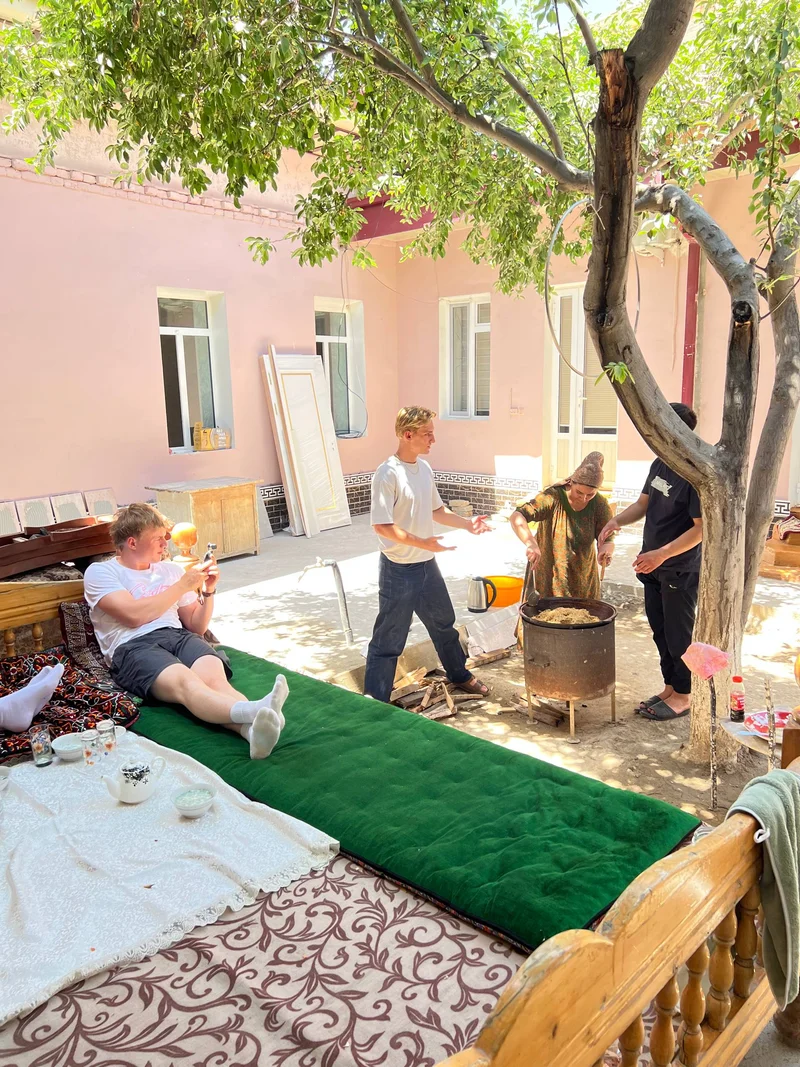
Plov is the national dish of Uzbekistan and a symbol of hospitality. It is made with rice, meat, carrots, onions, and spices, cooked in a large cauldron called a qozon.
Each region has its own style, but plov is usually served at lunchtime and eaten together. Watching it being cooked is often as memorable as tasting it.
Samsa – The Perfect Street Food
Samsa are baked pastries filled with meat, onions, or pumpkin. They are traditionally cooked in a clay tandoor oven, giving them a crispy exterior and juicy filling.
You’ll find samsa:
- In bazaars
- At street stalls
- In local bakeries
They’re ideal for a quick snack while exploring the city.
Shashlik – Grilled to Perfection
Shashlik consists of skewered meat grilled over open fire. Lamb, beef, and chicken are the most common options, often served with sliced onions and fresh bread.
This dish is especially popular in the evenings and is often enjoyed outdoors with friends or family.
Non – Traditional Uzbek Bread
Bread holds a special place in Uzbek culture. Round, flat, and beautifully patterned, non is baked daily and served with almost every meal.
It is never placed upside down and is treated with great respect—a reflection of its cultural importance.
Lagman & Noodle Dishes
Lagman is a noodle-based dish influenced by Central Asian and Uyghur cuisine. It can be served as a soup or a stir-fry, with vegetables and meat.
It’s a great option for travelers looking for something lighter but still rich in flavor.
Fresh Salads & Side Dishes
Meals are often accompanied by fresh salads made from tomatoes, cucumbers, onions, and herbs. These add balance to heavier dishes and reflect the region’s agricultural abundance.
Pickled vegetables and seasonal fruits are also commonly served.
Sweets, Fruits & Desserts
Uzbekistan is famous for its fruits, especially in summer and autumn. Melons, grapes, apricots, and pomegranates are widely available.
Traditional sweets include:
- Halva
- Dried fruits and nuts
- Local pastries served with tea
Tea Culture in Uzbekistan
Tea is offered to guests as a sign of respect and welcome. Green tea is the most common, served in small bowls rather than cups.
Sharing tea is not rushed—it’s a moment to relax, talk, and connect.
Where to Experience Uzbek Food Best
You can enjoy Uzbek cuisine in:
- Family-run restaurants
- Traditional teahouses
- Local homes during cultural experiences
Food often tastes best when paired with stories from locals who prepare it using generations-old methods.
A Taste of Hospitality
Uzbek meals are generous, and guests are always encouraged to eat more. Refusing food politely is accepted, but hospitality is sincere and warm.
Sharing food is one of the easiest ways to feel connected to local culture.
Final Thoughts
Uzbek cuisine is more than food—it’s a cultural experience shaped by tradition, community, and pride. For many travelers, meals become some of the most memorable moments of the journey.