
Samarkand is one of the most fascinating destinations in Central Asia. Located in Uzbekistan, this historic city was an important stop along the ancient Silk Road, connecting merchants, scholars, and travelers from different parts of the world. Today, Samarkand attracts visitors with its magnificent Islamic architecture, lively bazaars, rich culture, and delicious Uzbek cuisine.
Whether you are planning a short city break or a longer journey through Uzbekistan, this Samarkand travel guide will help you organize your visit. Discover the best places to see, the ideal time to travel, how to get around, where to stay, what to eat, and how to make the most of your time in this remarkable city.
1. Why Visit Samarkand?
Samarkand is famous for its impressive historical monuments and its role in the development of Silk Road trade and culture. The city flourished under Amir Temur, also known as Tamerlane, in the 14th and 15th centuries, when it became a major political and cultural center.
The city offers much more than beautiful architecture. You can explore traditional markets, taste freshly baked Uzbek bread, visit centuries-old mausoleums, and experience the hospitality for which Uzbekistan is known.
Here are some of the main reasons to visit Samarkand:
Explore Registan Square, one of Central Asia’s most iconic architectural ensembles.
Visit the beautiful Shah-i-Zinda necropolis.
Discover the history of the Silk Road at local museums and monuments.
Shop for spices, dried fruits, handicrafts, and souvenirs at traditional bazaars.
Try authentic Uzbek dishes such as plov, shashlik, and samsa.
Experience a city where historic neighborhoods and modern life exist side by side.
Samarkand is also an excellent starting point for travelers who want to explore other destinations in Uzbekistan, including Bukhara, Tashkent, and Shahrisabz.
2. Best Time to Visit Samarkand
The best time to visit Samarkand is generally spring and autumn, when temperatures are often comfortable for walking and sightseeing.
Spring: March to May
Spring is a wonderful season for exploring Samarkand. The weather gradually becomes warmer, gardens turn green, and the city is pleasant for walking between its historical attractions.
March can still be cool, while April and May are often especially comfortable for sightseeing. Spring is also a popular time to experience local culture and seasonal celebrations.
Summer: June to August
Summer in Samarkand can be very hot, particularly in July and August. If you visit during this period, plan outdoor sightseeing for the morning and late afternoon, and take breaks during the hottest hours.
Carry drinking water, wear a hat, and use sun protection when exploring open squares and archaeological sites.
Autumn: September to November
Autumn is another excellent season to visit Samarkand. September and October are often comfortable for sightseeing, and markets may offer a wide variety of seasonal produce.
The weather becomes cooler toward November, so bring layers if you plan to spend long periods outdoors.
Winter: December to February
Winter is generally quieter than the main spring and autumn travel seasons. Temperatures can be cold, and occasional snow or rain is possible.
Winter can suit travelers who prefer a calmer atmosphere, but warm clothing is essential.
Travel tip: Weather varies from year to year. Check the forecast shortly before your trip and plan outdoor activities accordingly.
3. How to Get to Samarkand
Samarkand is accessible by air, train, and road. The best option depends on where your journey begins and how much time you have.
By plane
Samarkand International Airport receives domestic and international flights, although routes and frequencies depend on the season and airline.
After arriving, you can arrange a private transfer to your hotel or use an available local transport service. Confirm the pickup location and fare before traveling.
By train
Train travel is a convenient way to reach Samarkand from other major Uzbek cities.
The railway network connects Samarkand with destinations including Tashkent and Bukhara. High-speed services operate on selected routes, subject to the current timetable.
Book ahead when traveling during holidays or busy tourist periods. Check official railway information for departure times, ticket availability, and journey duration.
By car or private transfer
A private transfer is useful if you want flexibility, need hotel-to-hotel transportation, or plan to stop at places along the way.
For example, a private transfer between Samarkand and Tashkent can be arranged with stops for photographs, meals, or sightseeing if agreed in advance.
For journeys to remote destinations, such as the Aydar Lake area or the Seven Lakes in Tajikistan, confirm the route, vehicle type, border requirements where relevant, and total travel time before departure.
4. The Best Places to Visit in Samarkand
Samarkand has enough historical and cultural attractions to fill several days. If your time is limited, start with the major monuments and add markets, museums, and local neighborhoods according to your interests.
Registan Square
Registan Square is the heart of historic Samarkand and one of the city's most recognizable landmarks.
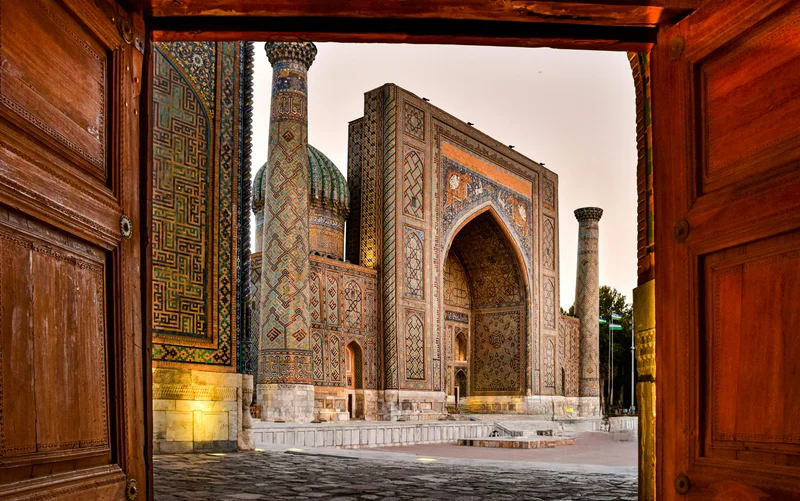
The square is surrounded by three monumental madrasahs: Ulugh Beg Madrasah, Sher-Dor Madrasah, and Tilya-Kori Madrasah. Their decorative tilework, monumental entrances, and intricate architectural details reflect the artistic achievements of the Timurid and later periods.
Allow time to appreciate the buildings from different angles and explore the details of their facades.
Shah-i-Zinda Necropolis
Shah-i-Zinda is a remarkable complex of mausoleums and religious structures connected by a historic passageway. Its richly decorated facades feature shades of blue, turquoise, and intricate geometric patterns.
It is one of the most memorable places in Samarkand for travelers interested in architecture, history, and photography.
Wear respectful clothing because this is a religious and historic site. Be prepared for steps and uneven walking surfaces.
Gur-e-Amir Mausoleum
Gur-e-Amir is closely associated with Amir Temur and the Timurid dynasty. Its impressive dome and richly decorated interior make it one of Samarkand's most important historical monuments.
A visit provides insight into the rulers who helped shape the city's architectural and political legacy.
Bibi-Khanym Mosque
Bibi-Khanym Mosque is one of the city's great historic religious buildings. Its monumental scale reflects the ambition of the era in which it was constructed.
The surrounding area is also a convenient place to continue toward the nearby Siyob Bazaar.
Siyob Bazaar
Siyob Bazaar is one of the best places to experience everyday life in Samarkand.
Browse stalls selling fresh produce, dried fruits, nuts, spices, sweets, and traditional bread. It is also an excellent place to observe local shopping traditions and discover regional ingredients.
If you want to purchase souvenirs, compare prices at several stalls and politely ask before taking photographs of people.
Afrasiyab Museum
The Afrasiyab Museum explores the history of ancient Samarkand and the archaeological site associated with the city's earlier settlement.
It is especially worthwhile for travelers who want to understand Samarkand beyond the monuments of the Timurid period.
Check current opening arrangements before visiting.
Ulugh Beg Observatory
The Ulugh Beg Observatory introduces visitors to the city's scientific history. Ulugh Beg was a ruler and astronomer whose work contributed significantly to the study of the stars.
The site is a good addition for travelers interested in astronomy, mathematics, and the intellectual achievements of medieval Central Asia.
Hazrat Khizr Mosque
Hazrat Khizr Mosque is another notable religious site in Samarkand, situated on elevated ground with views over parts of the surrounding city.
Its setting makes it an interesting stop for visitors exploring the historical area near the Siyob Bazaar and Bibi-Khanym Mosque.
Konigil Village
For a different experience, consider visiting Konigil, an area known for traditional craft activities, including handmade paper production.
It offers an opportunity to learn about local craftsmanship and see a side of Samarkand beyond its major historical monuments. Confirm the availability of demonstrations and workshops before your visit.
5. How Many Days Do You Need in Samarkand?
For most first-time visitors, two days is a good amount of time to explore Samarkand's main attractions without rushing.
One day can be enough for a highlights tour, but two days allow more time for museums, local markets, and a relaxed meal.
Suggested one-day itinerary
Morning
Start at Registan Square.
Visit Gur-e-Amir Mausoleum.
Explore Bibi-Khanym Mosque.
Afternoon
Walk through Siyob Bazaar.
Visit Shah-i-Zinda Necropolis.
Add Hazrat Khizr Mosque if time and opening arrangements allow.
Evening
Enjoy traditional Uzbek dinner.
Return to Registan Square or another central area for an evening walk, if accessible.
This itinerary involves considerable walking and may need adjustment according to opening hours, weather, and your pace.
Suggested two-day itinerary
Day 1: The historic center
Registan Square
Gur-e-Amir Mausoleum
Bibi-Khanym Mosque
Siyob Bazaar
Shah-i-Zinda Necropolis
Day 2: History and local culture
Afrasiyab Museum
Ulugh Beg Observatory
Konigil craft area
A traditional restaurant or local market
Free time for photography and exploring the city
You can change the order to suit your interests and the opening hours of individual attractions.
6. What to Eat in Samarkand
Food is an important part of the Samarkand experience. Uzbek cuisine is known for hearty rice dishes, grilled meat, fresh bread, soups, and a variety of salads.
Here are several dishes worth trying.
Samarkand plov
Plov, also known as pilaf, is one of Uzbekistan's most famous dishes. It is typically prepared with rice, carrots, onions, oil, and meat, although ingredients and cooking methods vary by region.
Samarkand has its own plov traditions, making it an excellent place to try this national favorite.
Samarkand bread
Traditional Samarkand bread is famous for its distinctive appearance and texture. Bread is an essential part of local meals and is often sold at bakeries and markets.
Buying freshly baked bread can be a simple but memorable part of your visit.
Shashlik
Shashlik consists of grilled skewered meat, commonly served with onions and sometimes vegetables. It is a popular option at Uzbek restaurants and outdoor dining places.
Samsa
Samsa is a baked pastry commonly filled with meat and onions, although other fillings are also available. It makes a convenient snack while sightseeing.
Lagman
Lagman is a noodle dish served with vegetables and usually meat in a flavorful sauce or broth. Recipes vary, so it is worth trying different versions if you have time.
Tea and sweets
Tea is commonly served throughout Uzbekistan. Enjoy it with dried fruits, nuts, or traditional sweets after a meal.
Food tip: If you have allergies or dietary requirements, explain them clearly before ordering. Vegetarian, vegan, and special-diet options may require advance planning, especially outside larger restaurants.
7. Where to Stay in Samarkand
Samarkand offers a range of accommodation, including hotels, guesthouses, and smaller family-run properties.
The best area depends on your travel style, budget, and preferred transport arrangements.
Near Registan Square
Staying near Registan is convenient if you want to walk to major historical attractions and restaurants.
This area can be a good choice for first-time visitors with limited time.
Near the historic city center
Accommodation around the historic center provides access to markets, monuments, and local restaurants. Some streets may be busy, so check the property's exact location and reviews before booking.
Near the railway station
Staying near the railway station may be practical if you have an early train or arrive late. However, you may need transport to reach the main sightseeing areas.
Choosing your accommodation
Before booking, consider:
Distance to the attractions you want to visit.
Whether breakfast is included.
Availability of air conditioning or heating for your travel season.
Guest reviews and cancellation conditions.
Airport or railway-station transfer options.
Whether the property can accommodate your arrival time.
For a short visit, convenience and location may be more valuable than choosing accommodation based on price alone.
8. How to Get Around Samarkand
You can explore parts of Samarkand on foot, but transport is useful because the city's attractions are spread across different areas.
Walking
Walking is an excellent way to experience the historic center. You can take your time admiring architecture, browsing shops, and discovering small streets.
Wear comfortable shoes and allow extra time for uneven surfaces, steps, and breaks.
Taxi
Taxis are useful for reaching attractions that are farther apart. Confirm the price or the payment method before beginning your journey if the fare is not clearly displayed.
Private car with driver
A private car is convenient for families, small groups, travelers with limited time, and visitors who prefer to avoid navigating between attractions themselves.
You can arrange a private city tour with planned stops and adjust the pace to your preferences.
Guided tour
A knowledgeable local guide can explain the historical background, architectural features, and cultural significance of the monuments.
A guided tour is particularly useful if you want more than photographs and basic information. For travelers who prefer independence, a self-guided visit is also possible with some advance research.
9. Practical Travel Tips for Samarkand
A little preparation can make your visit easier and more enjoyable.
Carry your passport or appropriate identification. Keep your travel documents secure and follow local requirements for identification.
Check monument opening hours and ticket prices. Fees, schedules, and access arrangements can change. Verify details close to your travel date.
Dress respectfully at religious sites. Clothing that covers your shoulders and knees is a sensible choice. Follow any specific rules displayed at the entrance.
Bring cash and a payment card. Payment methods vary between hotels, restaurants, markets, and small shops. Carry some local currency for everyday purchases.
Learn a few local words. Simple greetings such as “Assalomu alaykum” can make interactions warmer. Russian is also understood by many people, while English proficiency varies.
Protect yourself from the sun. During warm months, carry water, use sunscreen, and plan breaks in shaded areas.
Ask before photographing people. Be particularly considerate around religious spaces and people engaged in prayer.
Allow enough travel time. Do not schedule major monuments, meals, and long transfers too tightly, especially if you are traveling by train on the same day.
10. Is Samarkand Safe for Tourists?
Samarkand is a well-established tourist destination, and many visitors explore its main attractions independently. As in any city, however, it is sensible to take ordinary precautions.
Keep valuables secure in crowded places, use reputable transport providers, and confirm prices before accepting services. Be aware of your surroundings, particularly at busy markets and transport hubs.
Travelers should also take care in hot weather and wear suitable footwear around historic monuments.
If you plan to travel outside the city or cross an international border, check the route, transport arrangements, and relevant entry requirements in advance.
For more information, read our guide: Is Uzbekistan Safe for Tourists? Safety Tips and Local Advice.
11. Can You Visit Samarkand and Bukhara on the Same Trip?
Yes. Samarkand and Bukhara are two of Uzbekistan's most rewarding historic destinations, and they complement each other well.
Samarkand is especially famous for its monumental Timurid architecture, while Bukhara offers a historic center filled with traditional streets, mosques, madrasahs, and trading domes.
A practical itinerary is to spend two days in Samarkand and then continue to Bukhara by train or private transfer. The best option depends on your schedule, budget, and preferred travel style.
If you have more time, consider adding Tashkent or Khiva to create a broader Silk Road journey.
12. Day Trips from Samarkand
If you have extra time, Samarkand can also serve as a starting point for exploring nearby destinations.
Shahrisabz
Shahrisabz is associated with Amir Temur and contains important historical monuments. It can be visited on a day trip, although travel time and road conditions should be considered when planning the schedule.
Seven Lakes, Tajikistan
The Seven Lakes, also known as Haft Kul, are located in Tajikistan's Fann Mountains. The lakes are known for their changing colors and dramatic mountain scenery.
A trip from Samarkand requires crossing the Uzbekistan–Tajikistan border. Travelers should check their passport, visa, and entry requirements for both countries before booking. Border crossing procedures and journey times may vary.
For a more detailed overview, read our guide: Samarkand to Seven Lakes, Tajikistan: A Complete Travel Guide.
Aydar Lake and the Kyzylkum Desert
Aydar Lake and the surrounding desert region offer a very different experience from Samarkand's historic streets. Depending on the itinerary, visitors may enjoy desert landscapes, a traditional yurt-camp stay, and local cultural activities.
This trip usually requires careful transport planning and is better suited to travelers who have additional time beyond the main city sightseeing.
13. Frequently Asked Questions About Samarkand
Is one day enough to visit Samarkand?
One day is enough to see several major highlights, including Registan Square, Gur-e-Amir Mausoleum, and Shah-i-Zinda. However, two days provide more time for museums, markets, and local experiences.
What is Samarkand famous for?
Samarkand is famous for its Silk Road history, Registan Square, Shah-i-Zinda Necropolis, Gur-e-Amir Mausoleum, traditional crafts, and Uzbek cuisine.
Is Samarkand expensive for tourists?
Costs depend on your accommodation, transport, dining choices, and the attractions you visit. Travelers can choose from budget guesthouses and local eateries to more comfortable hotels and private tours. Check current prices when planning your budget.
Can I explore Samarkand without a guide?
Yes. Many central attractions can be visited independently. A guide is useful if you want a deeper understanding of the city's history, architecture, and local traditions.
What should I wear in Samarkand?
Comfortable clothing and walking shoes are ideal. For religious sites, choose respectful clothing that covers your shoulders and knees, and follow any posted requirements.
Do I need cash in Samarkand?
It is wise to carry some Uzbekistani soʻm, particularly for markets, small shops, and other purchases where card payments may not be available. Confirm payment options with your hotel or tour provider.
What is the best way to travel from Tashkent to Samarkand?
Train travel is a popular option, including high-speed services on selected departures. Check the official timetable and book tickets in advance when possible.
Is Samarkand suitable for families?
Yes. Families can enjoy the city's architecture, markets, and cultural attractions. Consider walking distances, the weather, and the needs of children when planning each day.
Should I book a Samarkand tour in advance?
Booking ahead can be helpful if you prefer a private guide, have limited time, or are traveling during a busy period. Independent travelers can also organize their visits thems